
Winter Window Installation Checklist for Homeowners
- Build in schedule flexibility for weather-related interruptions
- Hire a contractor experienced with cold-weather installations
- Confirm use of low-temp-rated materials (caulk, foam, flashing)
- Clear snow and ice from work areas before install day
- Apply for permits and inspections early to avoid seasonal delays
Thinking about replacing your windows during the colder months? You’re not alone and contrary to popular belief, winter can be one of the smartest times to get the job done. With lower contractor demand, faster scheduling, and immediate energy savings, cold-weather installations offer real advantages.
In this guide, we’ll break down whether you should install windows in winter, the pros and cons, cost implications, and what to watch for so you can make the most informed decision possible.
Can You Install Windows in Winter Without Issues?
Yes, you absolutely can install windows in winter as long as the installer uses weather-appropriate materials, follows climate-specific best practices, and adapts the work process to colder conditions. In fact, winter window installation is a common off-season practice in many parts of the U.S., especially the Northeast, Midwest, and Northwest, where heating efficiency becomes critical.
According to industry professionals and the U.S. Department of Energy, cold-weather installation does not negatively affect performance when done correctly. Modern installation materials including low-temperature expanding foams and caulks rated to -20°F or colder allow for airtight sealing even during freezing conditions.
Why Contractors Install Windows in Winter Successfully
To prevent interior heat loss and moisture exposure during winter installs, contractors apply strategic adaptations such as:
| Installation Technique | Purpose |
|---|---|
| One-room-at-a-time approach | Prevents widespread temperature drops throughout the home |
| Quick-seal protocol | Reduces exposure time per opening to under 10–15 minutes |
| Interior barrier setups | Use of plastic sheeting, ZipWalls, and thermal curtains |
| Heated caulk storage | Ensures materials remain flexible and bond correctly |
These methods are especially effective for retrofit or insert window installations, which involve less structural exposure compared to full-frame replacements.
Professional Consensus
- Window World confirms that their teams install windows year-round across 48 states, even in subfreezing temps, without compromising performance.
- ENERGY STAR and the National Fenestration Rating Council (NFRC) both note that installation timing is less important than proper sealing and insulating technique.
Example: In Minneapolis (Zone 6), winter installations make up nearly 30% of total annual window projects, often scheduled in January and February due to off-season availability and urgency of heat retention.
Final Word
If your contractor uses the right materials, adheres to weather-adaptive methods, and seals windows quickly and correctly, winter installations are just as effective—and often more affordable than summer installs.
This makes cold-weather replacement a smart move for homeowners looking to immediately reduce heating loss, especially in older homes with failing or drafty windows.
What Are the Real Benefits of Installing Windows in Winter?
Installing windows in winter offers unique advantages that go beyond availability—it can also reduce project costs, shorten wait times, and improve your home’s energy efficiency when you need it most.
1. Lower Costs Due to Off-Season Pricing
Many window installation companies offer 10–20% discounts during the winter months (December through February), when demand is lower. Fewer scheduled jobs mean contractors are more willing to negotiate pricing or run seasonal promotions to keep crews busy.
Example: According to U.S. contractor surveys, vinyl replacement windows that cost $700 each during peak spring season may drop to $600–$630 per unit in winter—resulting in potential savings of $1,000 or more on full-home projects.
2. Faster Scheduling and Shorter Timelines
During spring and summer, window installers often book 4–8 weeks out, especially in high-demand regions like California, New York, and Texas. In contrast, winter installations can be scheduled in as little as 5–10 business days, depending on product availability.
| Season | Avg. Scheduling Delay | Installer Availability | Cost per Window (Avg) |
|---|---|---|---|
| Spring/Summer | 3–6 weeks | Limited | $650 – $900 |
| Fall | 2–4 weeks | Moderate | $600 – $800 |
| Winter | 1–2 weeks | High | $500 – $750 |
3. Immediate Energy Savings in Cold Months
Replacing drafty or outdated windows in winter yields instant ROI through reduced heating costs. According to the U.S. Department of Energy, upgrading to ENERGY STAR certified windows in cold climate zones can save homeowners $120–$480 annually on utility bills especially if replacing single-pane units or older frames with air leaks.
- Energy-efficient frames and low-E glass coatings trap warm air, reducing reliance on HVAC systems
- Insulated frames and argon-filled panes reduce thermal loss during freezing temperatures
4. Access to Federal Tax Credits
Under the Inflation Reduction Act, homeowners can receive a 30% federal tax credit up to $600 annually for qualifying energy-efficient window upgrades through 2032. Winter installations that meet ENERGY STAR guidelines are fully eligible if completed within the same tax year.
Tip: Ask your installer to provide certification labels and tax form 5695 assistance for filing.
Final Words
If you’re looking to cut installation costs, schedule faster, and start saving on heating immediately, winter is not only a smart time to replace your windows it may be the most financially strategic one.
What Are the Downsides or Risks of Cold-Weather Installation?
While winter window installation is safe and effective when done properly, it requires greater care, experience, and temperature-sensitive materials to avoid long-term issues. Installers must account for environmental variables that don’t exist during warmer months.
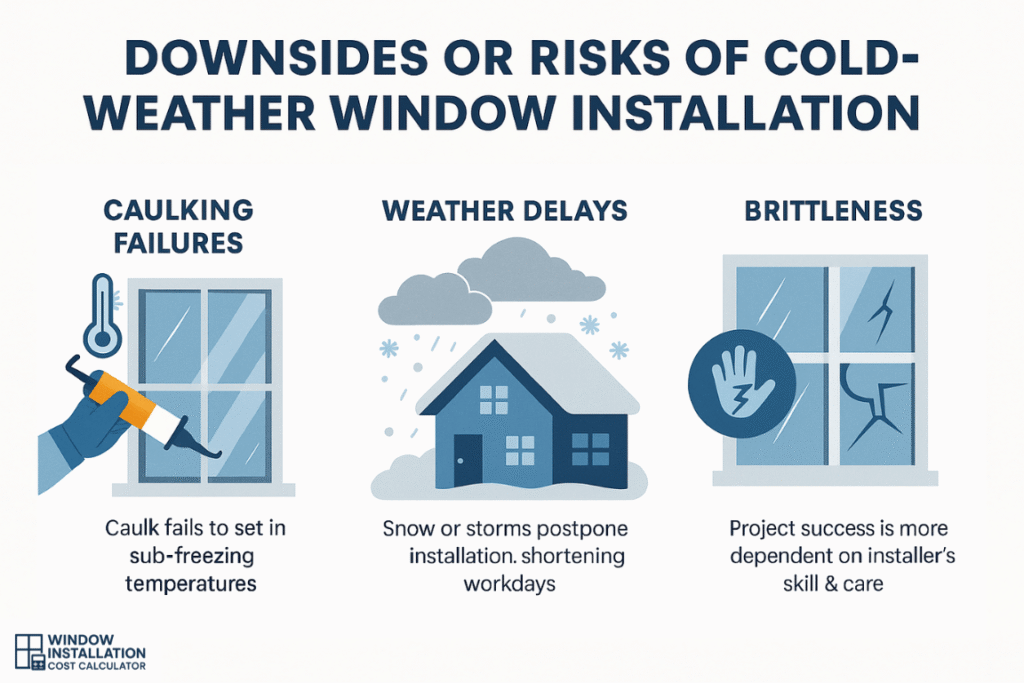
1. Caulk and Sealant Failures in Sub-Freezing Temperatures
Most standard sealants become brittle or fail to adhere correctly when applied below 40°F. If your contractor isn’t using low-temperature-rated caulk or foam insulation, you risk air and water infiltration, which can compromise energy efficiency and lead to future damage.
- Solution: Use sealants rated for installation at or below 0°F (e.g., polyurethane or hybrid elastomeric sealants).
- Risk: Improper curing can result in cracked seals, moisture intrusion, and voided warranties.
2. Shorter Workdays and Scheduling Delays
During winter, shorter daylight hours and increased weather volatility can slow project timelines.
| Factor | Impact on Installation |
|---|---|
| Limited daylight | Installers must work shorter shifts may stretch over multiple days |
| Ice, snow, or wind | May cause day-of delays or rescheduling |
| Temperature swings | Can impact adhesive cure times and foam expansion |
Tip: Ask your installer how they build flexibility into scheduling during winter months and whether they overbook.
3. Material Brittleness and Handling Risks
Frames especially those made of vinyl or aluminum can become more brittle in cold weather, increasing the risk of cracking during transport or fitting.
- Glass panes are also more prone to thermal shock and stress fractures if brought in cold and rapidly exposed to warm indoor air.
- Improper storage or rushed handling increases this risk, particularly with triple-pane units or custom shapes.
4. Installer Skill Becomes Even More Critical
Winter installation leaves no margin for error. Contractors must:
- Work efficiently to minimize exposure time
- Seal windows immediately and correctly
- Avoid over-expanding foam in cold conditions
Inexperienced or careless installers may not understand cold-weather curing times, fail to prep the window opening properly, or neglect thermal breaks leading to condensation, leaks, and draft complaints within weeks.
Final Word
Winter window installation amplifies small mistakes. From sealant selection to precise timing, every step needs to account for temperature, humidity, and weather. That’s why hiring a contractor with documented cold-weather experience and the right materials is non-negotiable if you’re replacing windows between November and March.
Does Winter Installation Affect Your Warranty or Product Lifespan?
No, installing windows in winter does not void your warranty or reduce product lifespan, as long as the installation is performed according to manufacturer guidelines and with weather-appropriate materials.
Manufacturer vs. Labor Warranty: What’s the Difference?
| Warranty Type | Covers | Typical Term |
|---|---|---|
| Manufacturer Warranty | Defects in materials frames, glass, seals, hardware | 20 years to lifetime |
| Labor or Workmanship | Installation issues alignment, sealing, caulking errors | 1 to 10 years |
Most manufacturers, including Andersen, Pella, Marvin, and Simonton, do not restrict installation based on season or temperature. What matters is that installers:
- Follow manufacturer-recommended procedures
- Use approved sealants, foams, and adhesives
- Maintain minimum application temperatures
Example: If a window’s caulk is applied below the rated temperature (often 20°F or 32°F), it may not adhere properly—voiding the installer’s labor warranty, not the product warranty.
Why Poor Cold-Weather Installation Risks Seal Failure
The most common winter-related failure is the breakdown of the insulated glass unit (IGU)—the air- or gas-filled space between panes. This typically occurs due to:
- Inadequate sealing or caulking in cold, damp conditions
- Excess condensation from improperly sealed gaps
- Foam expansion inconsistencies in low temperatures
Result: Moisture intrusion, foggy panes, and reduced energy efficiency—all within 12–24 months of installation.
Will a Properly Installed Winter Window Last Just as Long?
Yes. When installed correctly:
- The thermal seal remains intact for 20+ years
- Frame materials maintain structural integrity
- No additional degradation occurs due to temperature
In fact, if you’re replacing drafty windows in cold weather, you may start seeing ROI on energy bills immediately, without any impact on lifespan or coverage.
Pro Tip
Ask for written warranty documentation from both the installer and the manufacturer. Confirm that:
- Materials used are rated for winter application
- Installation procedures match warranty terms
- You receive a signed completion report confirming best practices were followed
Final Words
Cold-weather installation has no impact on your window’s warranty unless the job is done incorrectly. When done right, you enjoy full protection, full performance, and full peace of mind.
Are There Extra Costs or Savings to Expect in Winter vs Summer?
Yes, winter window installation often comes with meaningful savings, but also some situational risks. Seasonal fluctuations affect material availability, contractor demand, and scheduling efficiency. Knowing what to expect in each season helps you time your project for both value and convenience.
Seasonal Cost and Savings Comparison
| Cost/Schedule Factor | Winter | Spring/Summer (Peak) |
|---|---|---|
| Labor Cost per Window | $100 – $250 | $150 – $300 |
| Material Cost (Standard Vinyl) | $300 – $550 | $350 – $600 |
| Scheduling Wait Time | 1–2 weeks | 3–6 weeks |
| Rebates & Seasonal Discounts | High availability (up to 20%) | Limited or list-price only |
| Energy Bill Savings (first winter) | Immediate ($120–$480/year) | Deferred to winter season |
| Risk of Delay (weather, site prep) | Moderate (snow, frozen ground) | Low (longer days, dry ground) |
Key Takeaways
- Labor and material costs are generally 10–20% lower in winter due to reduced demand.
- Contractors may offer off-peak promos or bundle discounts to fill their winter schedules.
- Energy savings start immediately after a winter installation, while summer installs delay benefits until heating season.
- However, you should factor in possible snow or weather-related delays, especially in northern climates.
Bonus Tip
Check for local utility rebates or ENERGY STAR tax credits that apply to your state during the winter window replacement cycle. Many contractors will help you apply or bundle them into the quote.
Final Words
If you want to save money, skip peak-season waitlists, and start cutting energy bills before your next heating cycle winter is often the more cost-effective time to install windows.
What Installation Materials Work Best in Cold Temperatures?
Installing windows in winter requires materials that are engineered to perform in freezing conditions. Using the wrong foam, sealant, or frame can lead to poor adhesion, seal failure, and long-term performance issues like air leaks or condensation between panes. The key is choosing materials rated for sub-zero application and minimal thermal movement.
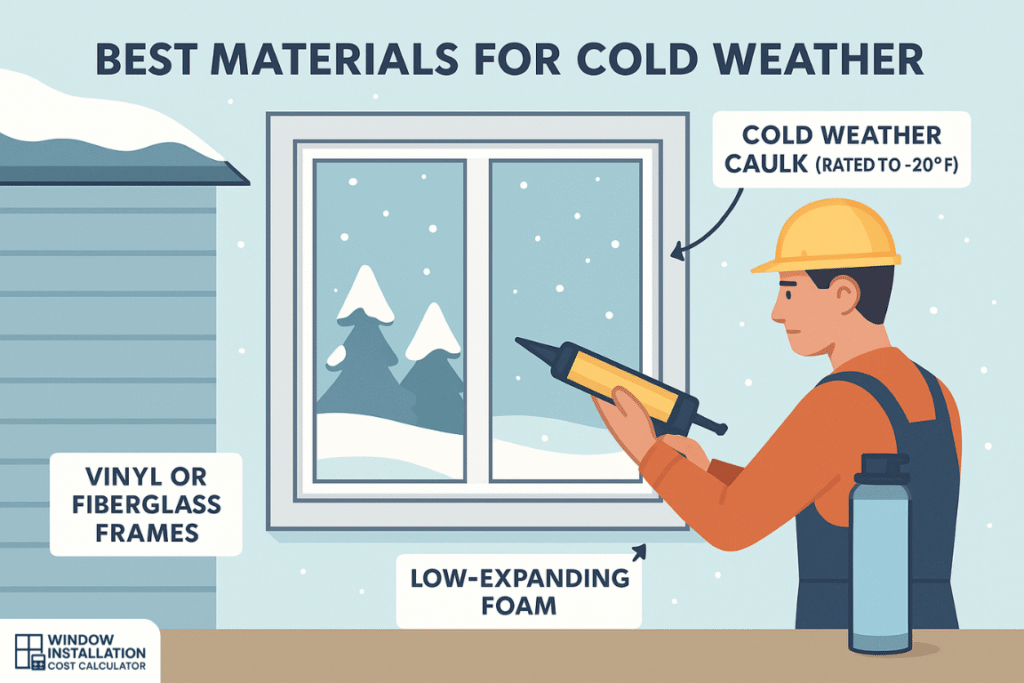
Best Caulks and Sealants for Cold-Weather Window Installation
Most general-purpose sealants fail to cure or bond properly below 40°F. For winter installation, look for products specifically labeled as cold-weather or all-weather, with -20°F or lower application ratings.
| Sealant Brand / Type | Application Temp Range | Use Case | ASTM or Performance Notes |
|---|---|---|---|
| OSI® Quad Max™ | -10°F to 120°F | Window/door frames, flashing, trim | ASTM C920, UV-resistant, paintable |
| GE Silicone 2+ Window & Door | -20°F to 120°F | Non-porous surfaces in extreme weather | Long cure, great elasticity |
| Sashco® Big Stretch | ≥ 0°F | Interior trim and window joints | ASTM C834, flexible, low shrink |
| Titebond® WeatherMaster Sealant | -20°F to 150°F | Exterior siding and window openings | Hybrid sealant, all-season, VOC-compliant |
Best Insulation Foams for Cold Environments
Low-expansion foam is essential to avoid frame warping, especially in retrofit installations. For cold-weather projects, use:
- Great Stuff™ Pro Window & Door (Low Temp Formula)
- Rated down to 20°F, expands minimally, prevents bowing
- Hilti CF 812 Cold Weather Foam
- Designed for winter construction, cures evenly at 14°F+
- Dow Enerfoam™
- Closed-cell polyurethane foam, durable and water-resistant for harsh climates
Pro Tip: Store foam cylinders and caulk indoors before use—material temperature matters just as much as ambient temperature.
Recommended Frame Materials for Cold Climates
Certain frame materials perform better than others in freezing temperatures due to lower thermal expansion rates and moisture resistance.
| Frame Material | Cold-Weather Performance | Notes |
|---|---|---|
| Fiberglass | Excellent—minimal expansion, rigid under temp swings | Resists cracking and warping; strong thermal stability |
| Vinyl | Good—cost-effective with insulated chambers | Prone to slight expansion but resists moisture |
| Wood | Moderate—natural insulation, but requires sealing | Can absorb moisture and swell; not ideal for wet climates |
| Composite | Excellent—engineered to blend wood strength and vinyl | Durable, stable, but higher cost |
| Aluminum | Poor—conducts heat, susceptible to condensation | Requires thermal breaks for use in cold climates |
Glass Package Considerations
- Dual-pane or triple-pane windows with argon or krypton gas fills are ideal for insulation.
- Ensure argon-filled IGUs (insulated glass units) are factory-sealed and installed carefully to avoid thermal shock or seal rupture in cold weather.
- Look for NFRC-certified windows with:
- U-Factor ≤ 0.30
- SHGC ≤ 0.25 (for sunny but cold climates)
Final Words
Cold-weather installation success depends on using products specifically rated for subfreezing temperatures. From sealants and insulation foams to frame types and glazing packages, every material must be selected with winter performance in mind. Done right, your windows will be just as airtight and long-lasting as any installed in spring.
How Does Climate Zone Affect Cold-Weather Window Installation?
Climate plays a critical role in how winter window installations should be approached. From material performance to sealing methods and inspection timelines, the optimal installation process varies significantly across U.S. climate zones. Yet, most window installation advice overlooks these regional differences—leaving homeowners without actionable guidance.
Here’s how winter installation strategy should change based on your region:
U.S. Winter Window Installation by Climate Zone
| Region | Recommended Practices | Key Considerations |
|---|---|---|
| Northern U.S. (Zones 5–7) |
Use low-expansion foam rated to 0°F; caulks rated to -20°F; fiberglass or composite frames | Target U-Factor ≤ 0.25 for insulation; plan for permit inspection delays due to snow |
| Midwest | Wind-resistant installation techniques; closed-cell foam for thermal protection | High wind + freeze zones; prioritize airtight seals and flashing integrity |
| Southeast | Quick-cure adhesives and hybrid caulks; moisture-resistant trim materials | Mild temps but high winter humidity; seal moisture barriers carefully |
| West Coast | Standard sealants and flexible vinyl or composite frames | Fewer restrictions; ideal for scheduling full replacements during off-peak season |
Real U.S. Climate Impacts on Window Installation
- Minnesota, New York, Michigan: Windows installed during snowstorms or deep freezes must be staged indoors overnight to avoid thermal shock. Installers often use portable heaters and cold-rated caulk guns to maintain material integrity.
- Georgia, Alabama: Winter installations must combat high moisture and mold risk, especially during sudden rain/humidity shifts. Installers use quick-set hybrid sealants to ensure adhesion even during damp conditions.
- California, Oregon, Washington: Rain is the primary concern. Installers often prefer overlapping drip caps and ensure all nail flanges are sealed with waterproof flashing tape.
Final Words
Cold-weather installation is not one-size-fits-all. The right materials, methods, and timeline vary by region and smart homeowners should choose a contractor who adjusts the strategy based on local weather and building code conditions. By localizing your approach, you maximize performance, minimize risk, and ensure your windows are built to last through your specific winters.
Do Permits, Inspections, or Code Enforcement Change in Winter?
Yes, winter can impact permitting and inspection schedules and ignoring this step may delay your window installation or leave you noncompliant with local codes. While permit requirements don’t change seasonally, the speed at which cities and counties process them often does.
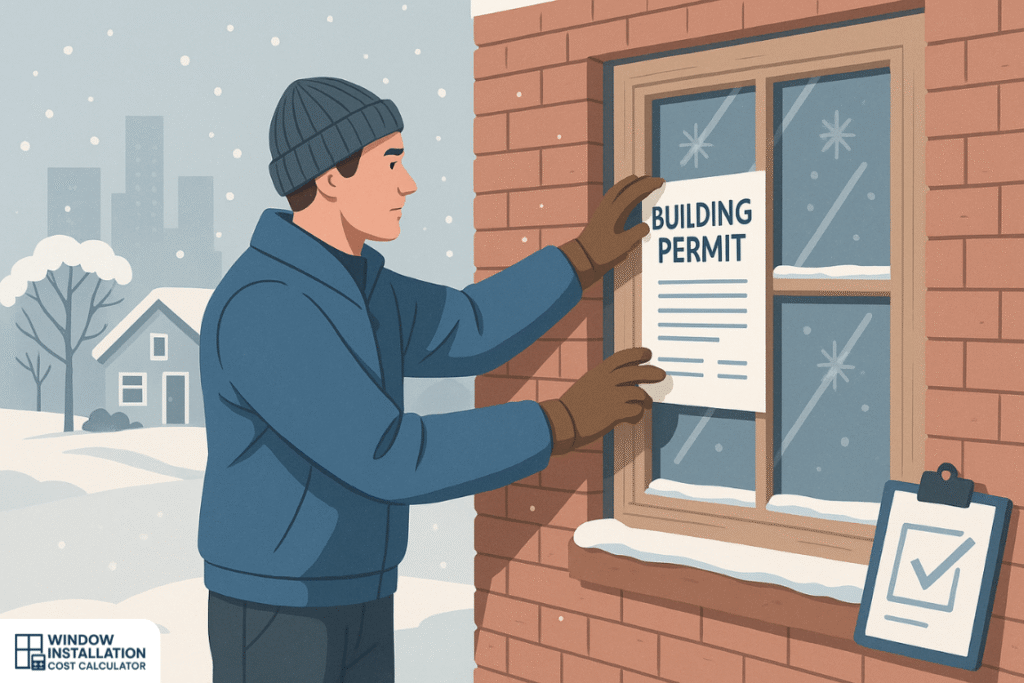
In colder regions, snow, ice, holiday staffing gaps, and reduced daylight hours can all affect how quickly inspectors can visit your property or how fast a permit gets approved.
Why Winter Permits and Inspections May Be Slower
| Winter Impact Factor | How It Affects Installation |
|---|---|
| Holiday Office Closures | Slows down permit approval between Thanksgiving and New Year’s Day |
| Snow/Ice Conditions | Inspectors may postpone site visits or enforce re-inspections |
| Shorter Workdays | Reduced daylight = fewer inspection slots each day |
| Backlog of Requests | Year-end projects or pre-winter emergency permits may push yours back |
| Limited Staffing | Municipal offices often run skeleton crews during colder months |
Pro Tips for a Smooth Winter Compliance Process
- Apply for permits early
Don’t wait for your install date to get paperwork moving. Submit 2–4 weeks in advance, depending on your city. - Ask your contractor who pulls the permit
In many U.S. states, licensed installers can handle this on your behalf. Get confirmation in writing. - Request a flexible inspection window
Choose contractors who are willing to coordinate around your local inspector’s availability and weather events. - Prepare the jobsite
Clear snow and ice from entry paths, driveways, and work zones so inspectors can safely assess compliance. - Verify winter code requirements
Some jurisdictions may require additional weatherproofing inspections (flashing, caulk, drip cap installation) or enforce stricter energy codes—especially in high-snowfall or coastal regions.
Regional Example
- Chicago, IL: Winter inspections often delay 1–3 days after a snowfall due to street access issues. Contractors recommend applying for permits no later than 3 weeks prior during December–February.
- Denver, CO: Frost line depth and temperature-sensitive materials are evaluated more carefully during winter inspections.
- Boston, MA: Some inspectors require proof of cold-rated sealants during final inspection to pass energy code compliance.
Final Words
Permits and code inspections don’t stop in winter but they can slow down. Proactive scheduling, early paperwork, and climate-aware installation planning help you avoid setbacks and keep your window project on track. Always verify your local building department’s timelines and communicate with your contractor to prevent mid-project delays.
Should You Install Windows in Winter or Wait?
Winter can be the best time to replace your windows if the conditions are right. Here’s a quick decision framework to help you choose the smartest path forward based on your goals, location, and installer readiness:
Install Now If
- You want to cut heating bills immediately and improve comfort this winter
- Your contractor uses cold-rated caulk, foam, and flashing
- You’ve received a significant seasonal discount that justifies scheduling now
- Your project involves simple replacement or retrofit windows, not major framing
- You’re located in a region with mild to moderate winters and minimal snow disruption
Consider Waiting If
- Your contractor has little to no experience with winter installations
- The project includes structural changes, siding removal, or custom framing
- You live in an area with extended deep freeze or severe snow risk (e.g., Dakotas, Montana, Upper Midwest)
- Inspection availability or permit processing is heavily delayed during the winter season
Final Words
If your home needs it and your installer is equipped for the job, don’t wait winter installation can save you time, money, and energy. But if you’re facing complex work or unpredictable weather, it may be worth holding off until spring for smoother execution.