
Quick Summary
Hiring a window installer without asking the right questions can lead to costly mistakes, code violations, and long-term energy loss. Use this guide to:
- Verify licenses, insurance, and certifications
- Compare material options and energy efficiency ratings
- Request a line-item cost breakdown and financing info
- Understand timelines, safety protocols, and cleanup standards
- Clarify warranties and post-installation support
- Evaluate what sets each contractor apart
Why should you ask questions before hiring a window installer? Because every decision you make directly affects your home’s comfort, energy performance, and resale value.
According to HomeAdvisor, the average labor cost to install a window in the U.S. ranges from $100 to $300 per unit, with full-project costs typically between $3,000 and $10,000+, depending on material, region, and scope. Yet 45% of all post-installation issues are due to incorrect installation, not the window product itself (NFRC & DOE data).
Poor installation =
- Drafts and air leaks
- Higher HVAC bills
- Voided warranties
- Moisture damage
These outcomes compound over time. A premium ENERGY STAR window installed improperly can lose up to 30% of its rated efficiency, which could mean $100–$465/year lost in potential energy savings (U.S. DOE, 2024).
To avoid that, the smartest homeowners ask proactive questions that clarify:
- Who’s installing it (employee vs subcontractor)
- What warranties cover (labor or product or both)
- How they handle permits, inspections, cleanup
Example: A homeowner in Florida saw condensation inside a brand-new double-pane vinyl window just three months after install caused not by product defect, but by improper flashing and sealing.
Asking early = clarity later.
Pro tip: Pair this guide with our window cost breakdown by material to estimate how much you’re investing and what you’re protecting.
Are You Licensed, Insured, and Certified to Install Windows in My State?
Hiring a properly licensed and insured window installer isn’t optional, it’s a legal and financial safeguard. Every U.S. state has its own contractor licensing requirements. For example:
- California requires a C-17 Glazing License for window installation
- Florida mandates state certification or registration depending on the scope
- Texas doesn’t require state licensing, so you must verify city-level permits and insurance
Failing to check this can cost you. If an uninsured contractor causes damage or injury, you could be held liable, and your homeowner’s policy may not cover it.
Always verify three key credentials:
| Credential Type | What It Covers |
|---|---|
| License | State or local permission to operate; ensures code compliance |
| General Liability Insurance | Covers property damage or bodily injury caused by the contractor |
| Surety Bond | Protects you if the contractor fails to meet contract terms |
Also ask if the installer has EPA Lead-Safe Certification, especially if your home was built before 1978, when lead-based paint was commonly used. Under federal law, any renovation or window replacement in such homes must follow lead-safe practices.
What to ask the installer:
- Are you licensed for window installation in this state or county?
- Can you provide proof of liability insurance and bonding?
- Do you follow EPA lead-safe work practices for older homes?
Red flag: If the contractor hesitates or provides vague answers, walk away. Unlicensed or uninsured work may violate local building codes and put you at risk for fines, failed inspections, or denied insurance claims.
Tip: You can verify licenses through your state’s contractor licensing board or database.
Asking this upfront protects your investment, your property, and your peace of mind.
How Many Years Have You Been Installing Windows, and Can I See Past Projects?
Experience in window installation directly impacts the quality, energy efficiency, and lifespan of your windows. According to data from the U.S. Bureau of Labor Statistics, over 18,000 glazing contractors operate nationwide, but only a subset specialize in residential window replacement. That distinction matters.
While general contractors may offer window services, dedicated window installers typically:
- Understand the nuances of different window frame types (vinyl, wood, fiberglass)
- Handle custom sizes, retrofits, and full-frame installs with fewer errors
- Know local code requirements and energy compliance standards (like Title 24 in California)
What to ask the contractor:
- How many years have you specialized in window installation?
- Can you show a portfolio of completed projects in my area?
- Do you have customer testimonials or references from recent jobs?
Asking for before-and-after photos and examples of local installations helps you assess workmanship, material variety, and design capability. You should expect to see installations similar to your property type whether it’s a ranch home, a two-story colonial, or a modern new build.
Here’s a useful comparison to evaluate experience:
| Installer Type | Key Indicators | Risk Level |
|---|---|---|
| Window Specialist (5+ yrs) | Photo portfolio, repeat clients, 5–10 installs/month | Low |
| General Contractor | Basic installs, fewer window-specific projects | Moderate |
| New Installer (<1 yr) | Limited references, fewer photos, low volume | High |
Pro tip: Look for installers who can explain challenges they’ve handled like installing in brick veneer walls, retrofitting into old aluminum frames, or matching historical window profiles.
Why this matters: Poor installation by an inexperienced contractor may lead to air leaks, seal failures, and voided warranties costing you hundreds in repairs and lost energy efficiency annually.
Bottom line: A qualified, experienced installer should have no issue showing you a transparent portfolio and verifiable customer references. If they can’t, keep looking.
Can You Walk Me Through the Total Cost, Payment Schedule, and Any Financing Options?
Before signing any contract, request a detailed cost breakdown for your window installation project. Vague quotes can hide surprise charges, while a transparent estimate helps you plan confidently and compare bids accurately.
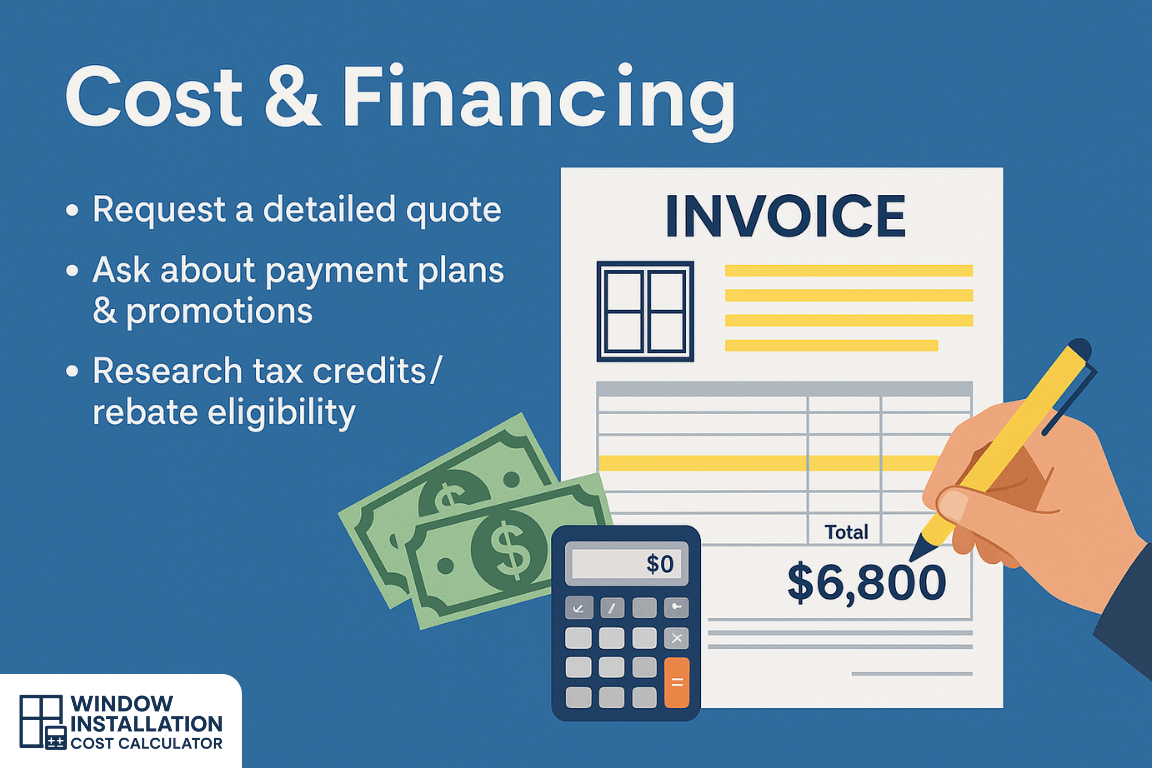
In the U.S., homeowners typically spend between $3,000 and $10,000 on full-home window replacement. The average cost per window ranges from $300 for basic vinyl units to over $1,500 for custom energy-efficient options, with labor adding another $100 to $300 per unit.
Ask the installer to itemize costs clearly, including:
| Line Item | Typical Range (USD) | Notes |
|---|---|---|
| Window unit (standard vinyl) | $300 – $700 | Depends on size, brand, and style |
| Energy-efficient upgrades | +$100 – $400 per window | Includes Low-E coatings, argon gas, ENERGY STAR certification |
| Installation labor | $100 – $300 per window | Varies based on window size, accessibility, and frame type |
| Disposal of old windows | $50 – $150 total | May or may not be included in the quote |
| Permit fees | $50 – $300 | Required in most U.S. cities and counties |
| Taxes and other fees | Varies | Based on invoice structure and local tax rules |
Clarify the payment schedule:
- Is a deposit required? (Usually 10–30%)
- When is final payment due upon completion or inspection?
- Are materials billed separately from labor?
Ask if they offer financing plans or third-party payment options. Many national and local contractors partner with lenders like GreenSky or EnerBank USA to offer 0% promotional financing or low-interest installment loans.
If you’re pursuing energy-efficient windows, inquire about available federal tax credits and local utility rebates. Under the Inflation Reduction Act (2023–2032), homeowners can claim up to $600 per year for ENERGY STAR–rated window upgrades that meet IRS guidelines.
Example: In California, PG&E customers can qualify for $2–$4/sq.ft. rebates for qualifying dual-pane retrofit windows that meet SHGC/U-factor thresholds.
What to ask the contractor:
- Can I get a line-item quote showing labor, materials, permits, and extras?
- Do you offer financing or payment plans?
- Will my project qualify for federal tax credits or local rebates?
Pro tip: Compare three quotes side by side using a spreadsheet, checking for hidden fees like delivery, scaffolding, or lead paint mitigation. Transparency today prevents budget shocks tomorrow.
What Energy Efficiency Features Will These Windows Provide, and What’s the ROI?
Energy-efficient windows are not just upgrades they’re long-term savings engines. Choosing the right features can reduce utility bills, improve indoor comfort, and increase home value. But those benefits depend heavily on the specifications of the windows you install and whether your contractor understands how to optimize for your climate zone.
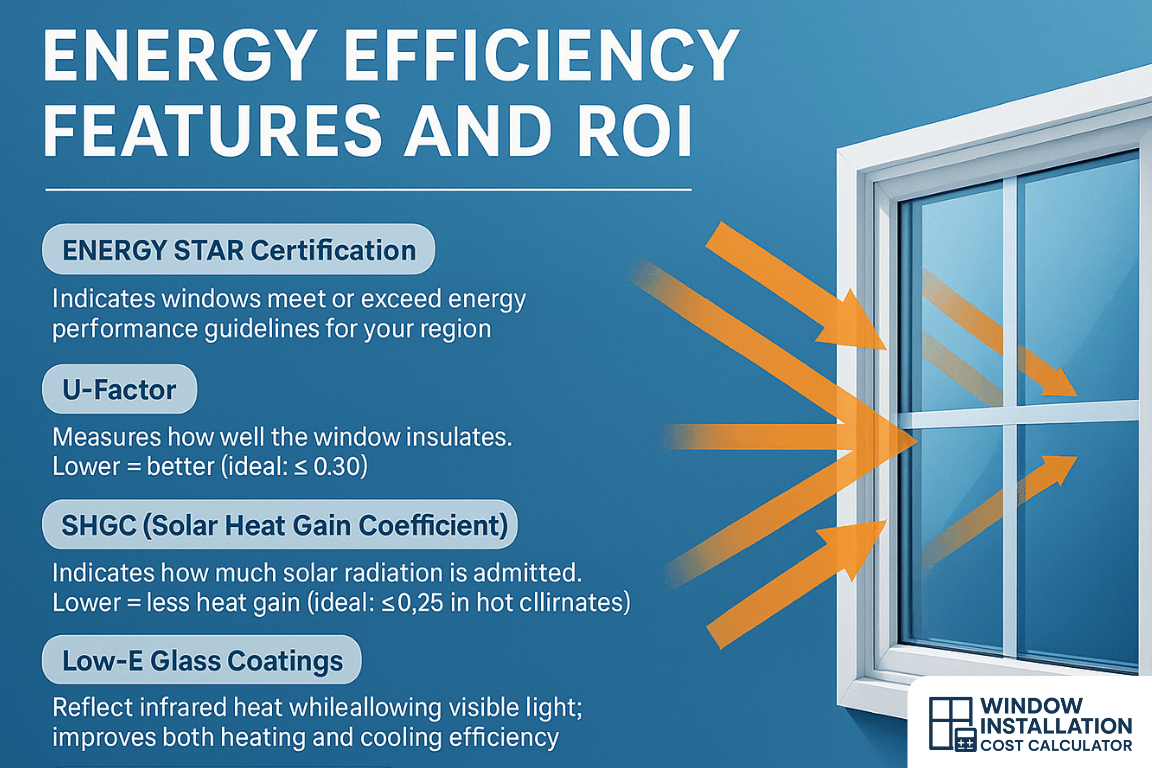
The most important energy performance metrics include:
| Feature | Description |
|---|---|
| ENERGY STAR Certification | Indicates windows meet or exceed energy performance guidelines for your region |
| U-Factor | Measures how well the window insulates. Lower = better (ideal: ≤ 0.30) |
| SHGC (Solar Heat Gain Coefficient) | Indicates how much solar radiation is admitted. Lower = less heat gain (ideal ≤ 0.25 in hot climates) |
| Low-E Glass Coatings | Reflect infrared heat while allowing visible light; improves both heating and cooling efficiency |
| Argon or Krypton Gas Fill | Insulating gas between panes that reduces thermal transfer |
| Multiple Panes (Double/Triple) | Increases insulation and reduces noise |
Sample ROI: Realistic Annual Energy Savings
According to the U.S. Department of Energy:
- Replacing single-pane windows with ENERGY STAR certified models can save $101–$583/year, depending on your climate.
- In colder regions, windows with a low U-Factor (≤ 0.25) can significantly reduce heating loss.
- In hotter regions (e.g., Florida, Texas), a low SHGC (≤ 0.23) reduces cooling costs and helps meet Title 24 or IECC requirements.
Example Comparision Table
| Window Type | U-Factor | SHGC | Avg. Annual Savings |
|---|---|---|---|
| Basic Double-Pane (No Low-E) | 0.45 | 0.55 | $80 – $150 |
| ENERGY STAR Low-E Double-Pane | 0.30 | 0.25 | $150 – $350 |
| Triple-Pane with Gas Fill | 0.18 | 0.23 | $300 – $500 |
What to ask the contractor:
- What is the U-Factor and SHGC rating of the windows you’re recommending?
- Are they ENERGY STAR certified for my climate zone?
- Will I qualify for any tax credits or rebates by choosing this package?
- Can you estimate the energy savings based on my utility usage?
Final takeaway: Energy-efficient features are only valuable when properly matched to your home’s location and installed without gaps or thermal bridges. A knowledgeable installer should be able to calculate your estimated ROI not just quote buzzwords.
Can You Compare Window Frame Materials and Help Me Choose the Right Fit?
Window frame material directly affects cost, durability, energy performance, and curb appeal yet many homeowners make this decision based on appearance alone. The right frame material should match your climate, aesthetic preferences, and maintenance expectations.
Here’s a breakdown of the most common residential window frame materials:
| Material | Pros | Cons | Typical Lifespan |
|---|---|---|---|
| Vinyl | Affordable, low-maintenance, good thermal performance | Limited color options, prone to warping in extreme heat | 20–30 years |
| Fiberglass | Highly durable, weather-resistant, low expansion/contraction | Higher upfront cost, limited availability in some regions | 30–50 years |
| Wood | Excellent insulation, classic appearance, highly customizable | High maintenance, susceptible to rot, pests, and warping | 30+ years with regular upkeep |
| Aluminum | Strong, slim profiles, affordable in commercial settings | Poor thermal performance, prone to condensation | 15–25 years |
| Composite | Combines benefits of wood and vinyl; rot- and fade-resistant | More expensive than vinyl, limited installer familiarity | 30–40 years |
Good–Better–Best Tier Summary
| Tier | Frame Type(s) | Best For |
|---|---|---|
| Good | Vinyl | Budget-conscious homeowners in mild to moderate climates |
| Better | Fiberglass, Composite | Homes in extreme climates (hot, cold, coastal); low maintenance |
| Best | Wood (interior), Fiberglass (exterior) | Historic homes, high-end custom builds, luxury curb appeal |
What to ask the contractor:
- Which frame material do you recommend based on my location and budget?
- Can I see real examples of these materials installed?
- What warranties are offered for each material type?
- Are there customization options for color, finish, or texture?
Final note: A knowledgeable installer should not only compare technical specs, but help you evaluate trade-offs between performance, durability, aesthetics, and cost. This isn’t just about “which is best” it’s about which is right for your home.
What’s the Timeline and How Will You Handle Communication During the Project?
Understanding the full project timeline and communication flow helps you manage expectations, avoid disruptions, and hold your contractor accountable. The window installation process isn’t just about the day of install it includes measurement, ordering, delivery, prep work, and cleanup.
Most standard residential window projects follow a typical 4–6 week timeline from quote to completion, but this can vary based on seasonality, material availability, and weather.
Typical Residential Window Installation Timeline
| Phase | Estimated Time | Details |
|---|---|---|
| Initial Consultation + Quote | 1–3 days | In-home measurements, material choices, detailed estimate provided |
| Product Ordering | 1–3 weeks | Lead time depends on brand, material, customization |
| Installation Scheduling | 1–5 days after delivery | Weather, installer availability, and permit readiness affect timing |
| Installation Day(s) | 1–3 days | Standard jobs: 5–10 windows/day; large/custom projects may take longer |
| Final Walkthrough + Cleanup | Same day or next | Inspect operation, sealing, finish work, and remove all debris |
Key Communication Questions to Ask:
- Will I receive updates at each stage of the process?
- How do you communicate email, phone, text, or project tracking apps?
- What happens if materials are delayed or weather halts installation?
- Can I contact someone directly if I have questions or concerns?
Look for contractors who use clear communication tools, such as:
- Project dashboards or shared calendars
- Automated email updates when delivery or permits are confirmed
- Daily or post-install messages for status tracking
Delays caused by poor communication are one of the top homeowner complaints in residential projects. In contrast, contractors who maintain clear, consistent communication typically have higher satisfaction ratings and fewer disputes.
Bottom line: Choose an installer who values proactive updates and provides a reliable communication system not just someone who “will call you when they’re ready.” Transparency drives trust, and trust ensures the job stays on track.
What Are Your Jobsite Safety and Cleanup Protocols?
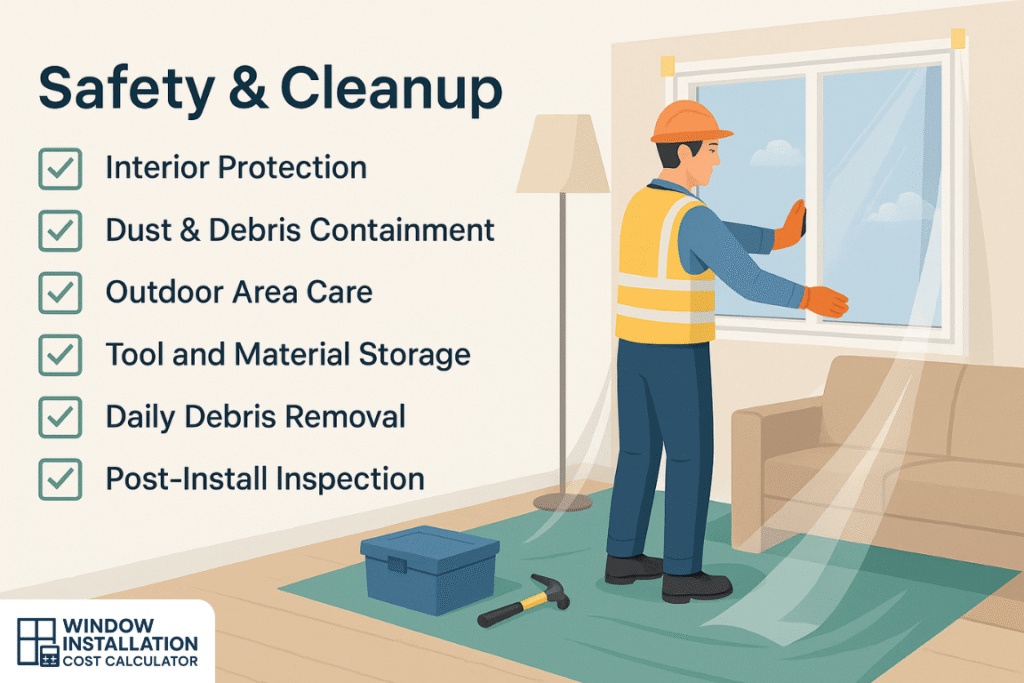
Window installation is an invasive process that affects both the interior and exterior of your home. Without proper safety procedures and cleanup, you risk property damage, dust exposure, debris hazards, and even warranty issues due to poor sealing or overlooked defects.
A professional installer should follow strict jobsite safety and cleanliness standards before, during, and after the project.
What Safe Window Installation Should Include
| Area of Concern | Best Practices to Expect |
|---|---|
| Interior Protection | Use of drop cloths, plastic sheeting, floor runners in high-traffic areas |
| Dust & Debris Containment | Removal of existing windows without releasing glass shards or frame debris |
| Outdoor Area Care | Protection of landscaping, decks, and entryways from falling debris and ladders |
| Tool and Material Storage | No tools or fasteners left unsecured overnight |
| Daily Debris Removal | Vacuuming, sweeping, and disposal of all old frames, nails, insulation, and packaging |
| Post-Install Inspection | Final walkthrough checking for caulk gaps, leveling, and sash operation |
Post-Installation Cleanup Checklist
| Cleanup Step | Why It Matters |
|---|---|
| Old window and debris removed from site | Prevents injury, maintains property appearance |
| Window glass and frames wiped clean | Ensures product is defect-free and functional |
| Vacuuming or sweeping of affected areas | Removes fine dust, insulation, and caulk bits |
| Final seal and insulation inspection | Protects long-term energy performance and prevents air/moisture leaks |
Questions to Ask Your Installer:
- How do you protect my flooring, furniture, and landscaping during installation?
- Will you haul away the old windows and jobsite debris?
- Is cleanup included in the quote, or billed separately?
- Do you conduct a post-install inspection with the homeowner?
Tip: If your home was built before 1978, verify that the installer follows EPA Lead-Safe protocols when disturbing painted surfaces. Skipping this step isn’t just dangerous—it’s illegal under federal regulations.
Bottom Line: Cleanliness and safety are indicators of a contractor’s professionalism. A quality installer should leave no trace behind except well-sealed, properly installed windows. Anything less puts your comfort, home value, and family at risk.
Do You Pull Permits and Comply With Local Building Codes?
Compliance with local building codes is not optional it’s a legal requirement. Whether you’re replacing a single window or doing a full-home retrofit, failing to obtain the proper permits can result in fines, delays, failed inspections, and even issues when selling your home.
A qualified contractor should manage all necessary permits, inspections, and code compliance specific to your local jurisdiction.
Why Permits Matter for Window Installation
- Structural Changes: Enlarging or altering window openings often requires engineering approval and city inspections.
- Energy Compliance: In states like California, all replacement windows must meet Title 24 energy efficiency standards.
- Safety Codes: Egress window requirements, tempered glass near tubs/showers, and fall protection apply in many jurisdictions.
- Climate-Specific Regulations:
- Florida: Requires hurricane impact-rated windows in coastal and High-Velocity Hurricane Zones (HVHZ).
- California: Mandates wildfire-rated (WUI) compliant glazing in certain areas.
- Minnesota/New York: Enforce strict insulation and condensation prevention requirements.
What to Ask the Installer
| Question | Why It Matters |
|---|---|
| Do you handle all necessary permits and inspections? | Ensures the work is legally authorized and inspected by a local authority |
| Are the windows you’re installing compliant with my local building codes? | Avoids fines, rework, and insurance issues |
| Do you offer impact-rated, egress, or tempered options if required? | Confirms safety code compliance and reduces future liability |
| Will I receive documentation showing final approval? | Helps during home resale and warranty claims |
Permit Management Table
| Region | Permit Required? | Special Code Notes |
|---|---|---|
| Florida (HVHZ) | Yes | Impact-rated windows required in coastal zones |
| California (WUI zones) | Yes | Windows must meet fire-resistant glazing standards |
| Texas (varies by city) | Varies | Some areas require permits only for structural changes |
| Minnesota | Yes | Strict energy efficiency and condensation code compliance |
Final Tip: Ask to see sample permits or code compliance documents the contractor has submitted for previous jobs in your area. If a contractor tells you permits aren’t needed verify that with your local building department.
Conclusion: Proper permitting isn’t just red tape it’s your assurance of safety, legality, and long-term peace of mind. A code-compliant window installation safeguards your home, reduces liability, and improves resale value.
What Kind of Warranty and Post-Installation Support Is Offered?
A high-quality window installation should be backed by more than a handshake. Warranties protect your investment against defects in materials, workmanship, and long-term performance—yet many homeowners overlook this part of the agreement until something goes wrong.
In the U.S., window warranties typically fall into three categories:
| Warranty Type | What It Covers | Typical Term |
|---|---|---|
| Manufacturer Warranty | Defects in window frames, glass, hardware, and factory seal failures | 20 years to lifetime (varies by brand) |
| Labor/Workmanship Warranty | Errors in installation, alignment, sealing, caulking, or fitting | 1–5 years (some premium installers offer 10+ years) |
| Glass Breakage Warranty | Covers accidental glass breakage or cracks, often in limited scenarios | Optional / 5–20 years |
What to Ask Your Installer
- Is your labor warranty separate from the manufacturer’s coverage?
- What happens if I notice condensation between the panes or failed seals?
- Do you offer free or paid annual inspections or maintenance visits?
- Will I receive a written warranty certificate with full terms?
Key Red Flags
| Issue | Why It’s a Problem |
|---|---|
| “Lifetime” warranty with no fine print | Some warranties only apply to the original owner and are not transferable |
| No labor warranty at all | Installer may not stand behind their workmanship |
| Verbal-only promises | Always request documentation in writing |
Real Example
A homeowner in Illinois installed double-pane vinyl windows with Low-E coatings and argon gas.
Within 18 months, they noticed foggy glass and failed seals. Because the installer’s labor warranty was only 12 months and the manufacturer claimed “improper installation,” the entire replacement cost fell on the homeowner a $3,200 mistake.
Conclusion: A reliable contractor will clearly outline who covers what, for how long, and under what conditions. Don’t assume everything is included. Ask for specifics about seal failure coverage, hardware issues, and whether service calls are free or charged. Great installers offer support long after the last window is installed—bad ones disappear with your check.
Hire Smarter, Not Just Faster
Choosing the right window installer is not just about comparing quotes it’s about protecting your home, your money, and your peace of mind for decades. Asking detailed, informed questions upfront ensures you’re hiring a contractor who is licensed, insured, experienced, and committed to high-quality, code-compliant work.
From understanding energy efficiency ratings and frame materials, to verifying warranties, communication standards, and cleanup protocols, each question covered in this guide gives you more control over your investment and fewer surprises down the line.
Don’t settle for vague promises or rushed decisions. Use this checklist to evaluate your options, avoid common pitfalls, and confidently choose a window installer who adds real value not hidden costs.